Pain Down the Leg
Pain that travels from the low back or buttock into the leg is a hallmark of nerve irritation, most often sciatica.

Overview
What This Symptom May Mean
When pain shoots, burns, or tingles down the leg, the sciatic nerve or one of its roots is usually involved.
Herniated discs, piriformis tightness, and spinal stenosis are the most common drivers.
Possible Causes
Conditions Commonly Associated With This Symptom
Sciatica
Nerve pain traveling from the low back or buttock down one leg.
Read about Sciatica →Herniated Disc
A disc's inner gel pushes out and can irritate nearby nerves.
Read about Herniated Disc →Piriformis Syndrome
A tight deep-glute muscle can compress the sciatic nerve.
Read about Piriformis Syndrome →Spinal Stenosis
Narrowing of the spinal canal crowds and irritates nerves.
Read about Spinal Stenosis →Pinched Nerve
A nerve root is compressed, causing shooting or burning symptoms.
Read about Pinched Nerve →Degenerative Disc Disease
Age-related disc thinning that narrows nerve openings.
Read about Degenerative Disc Disease →
Occurs With
Symptoms That Commonly Occur Together
- Shooting or burning down the leg
- Numbness or tingling in the foot
- Weakness in the leg
- Buttock pain
Common Triggers
When This Symptom Tends to Show Up
Prolonged Sitting
Long stretches at a desk or on the couch load the low back.
Bending Forward
Forward bending increases disc pressure.
Walking Long Distances
Extended walking can flare nerve or joint symptoms.
Lifting Objects
Loading the spine — especially with rotation — is a common trigger.
Recommended
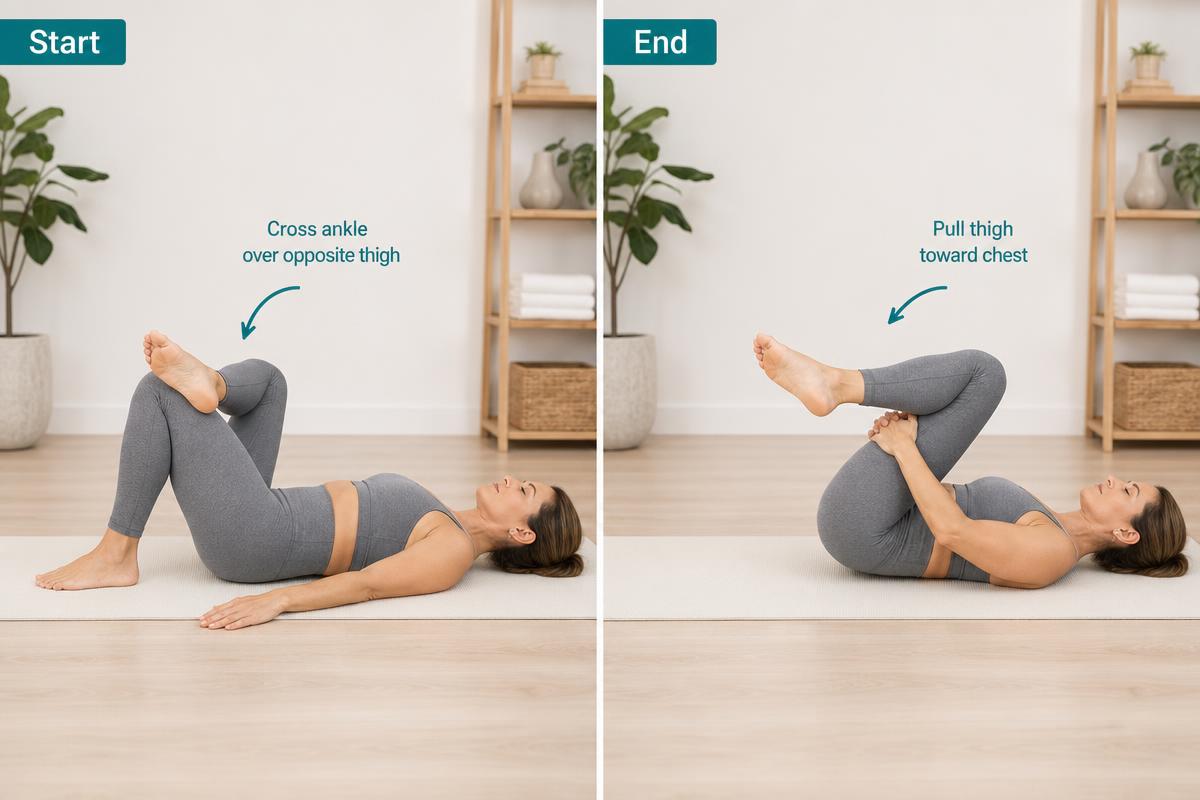
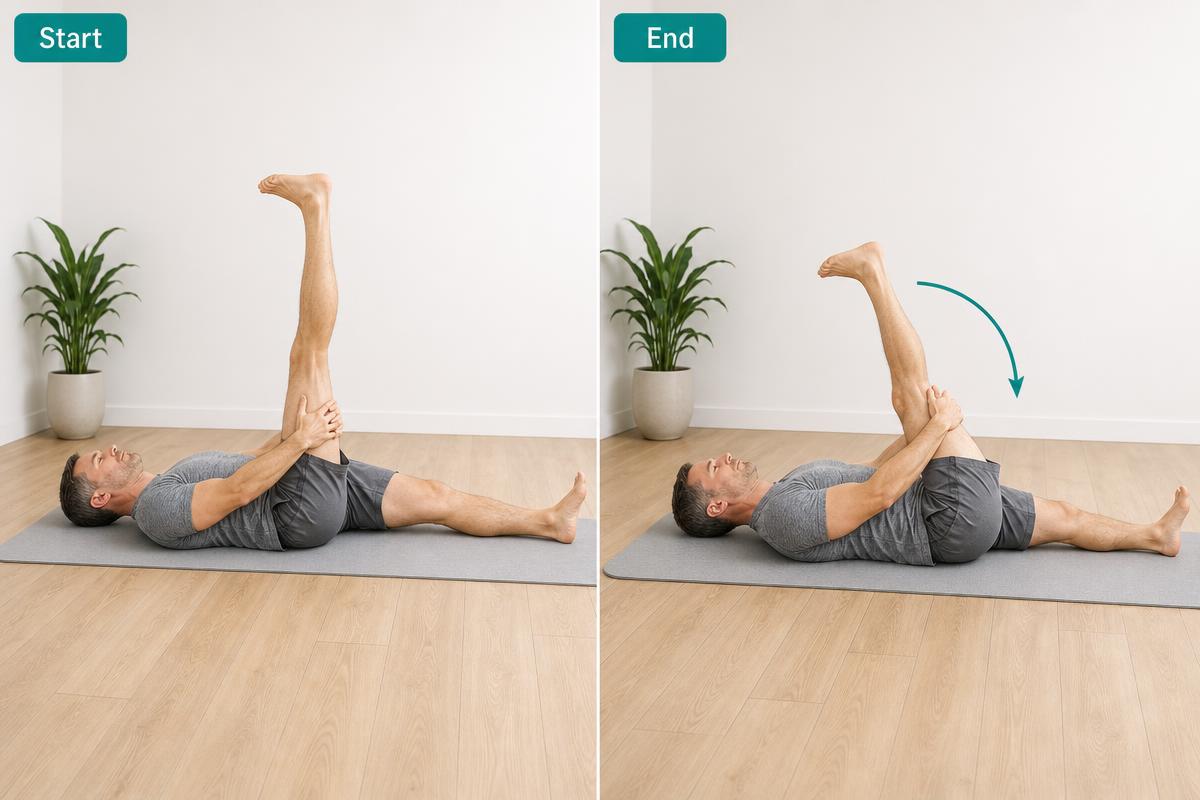
Stretches That May Help



Self-Care
Daily Habits That Help
Stay Active
Gentle daily movement typically beats prolonged rest.
Break Up Sitting
Stand or walk for a minute every 30–45 minutes.
Walk Daily
A 10–20 minute walk keeps tissues loose and blood flowing.
Lift Smart
Hinge at the hips, keep the load close, use your legs.
Mind Your Posture
Stack ears over shoulders and shoulders over hips.
Sleep Supported
Use a pillow between or under your knees for support.
When to Seek Immediate Medical Care
The following symptoms need prompt evaluation by a licensed medical professional:
- Loss of bowel or bladder control
- Progressive weakness in one or both legs
- Major trauma (fall, car accident)
- Fever with back pain
- History of cancer with new back pain
- Unexplained weight loss
- Severe numbness in the saddle / inner-thigh area
FAQ
Frequently Asked Questions
Ask the AI
Commonly Asked Questions to the AI
Related Conditions
Related Symptoms
Related Stretches
Disclaimer: The information on this page is for educational purposes only and is not a substitute for professional medical advice, diagnosis, or treatment. Always seek the advice of a qualified healthcare provider with any questions you may have.