Middle Back Pain: Causes, Stretches & AI-Powered Guidance
Learn what may be causing your thoracic back pain, find stretches that may help, and get a free personalized plan.

Overview
What Is Middle Back Pain?
Middle back pain refers to pain in the thoracic spine — the region between the base of your neck and the bottom of your ribs.
Because the thoracic spine attaches to the ribs, this area is naturally stiffer than the neck or low back. Long sitting, poor posture, and shallow breathing all limit its motion further.
Most middle back pain is muscular and postural. Less common causes include disc issues, arthritis, or referred pain from internal organs.
Daily mobility, better breathing patterns, and mid-back strengthening go a long way toward relief.
Common Causes
Why Does My Middle Back Hurt?
Desk Posture
Long slouched sitting stiffens the thoracic spine.
Read about Desk Posture →Muscle Strain
Twisting, lifting, or overuse can strain thoracic muscles.
Read about Muscle Strain →Weak Mid-Back
Weak muscles between the shoulder blades let the spine round.
Read about Weak Mid-Back →Poor Breathing Pattern
Shallow chest breathing limits thoracic movement.
Read about Poor Breathing Pattern →Backpack / Heavy Bags
Uneven loads fatigue the mid-back.
Read about Backpack / Heavy Bags →Stress & Tension
Stress increases mid-back tightness.
Read about Stress & Tension →Arthritis
Wear-and-tear changes contribute to stiffness.
Read about Arthritis →Rib Joint Irritation
Small rib-spine joints can become irritated with overuse.
Read about Rib Joint Irritation →
Symptoms
Common Symptoms
- Aching mid-back
- Sharp catch with movement
- Stiffness with rotation
- Pain worse with deep breathing
- Pain worse after long sitting
- Muscle knots and tightness
- Radiating discomfort around the ribs
- Shoulder-blade tension
Not Sure What's Causing Your Pain?
Symptoms from muscle strain, disc issues, nerve irritation, and joint problems often overlap. Our AI assessment asks a short set of questions about where you feel pain, how it moves with you, what makes it better or worse, and your history — then gives you personalized educational guidance and a stretch routine to try. It is not a medical diagnosis.
Recommended
Stretches That May Help
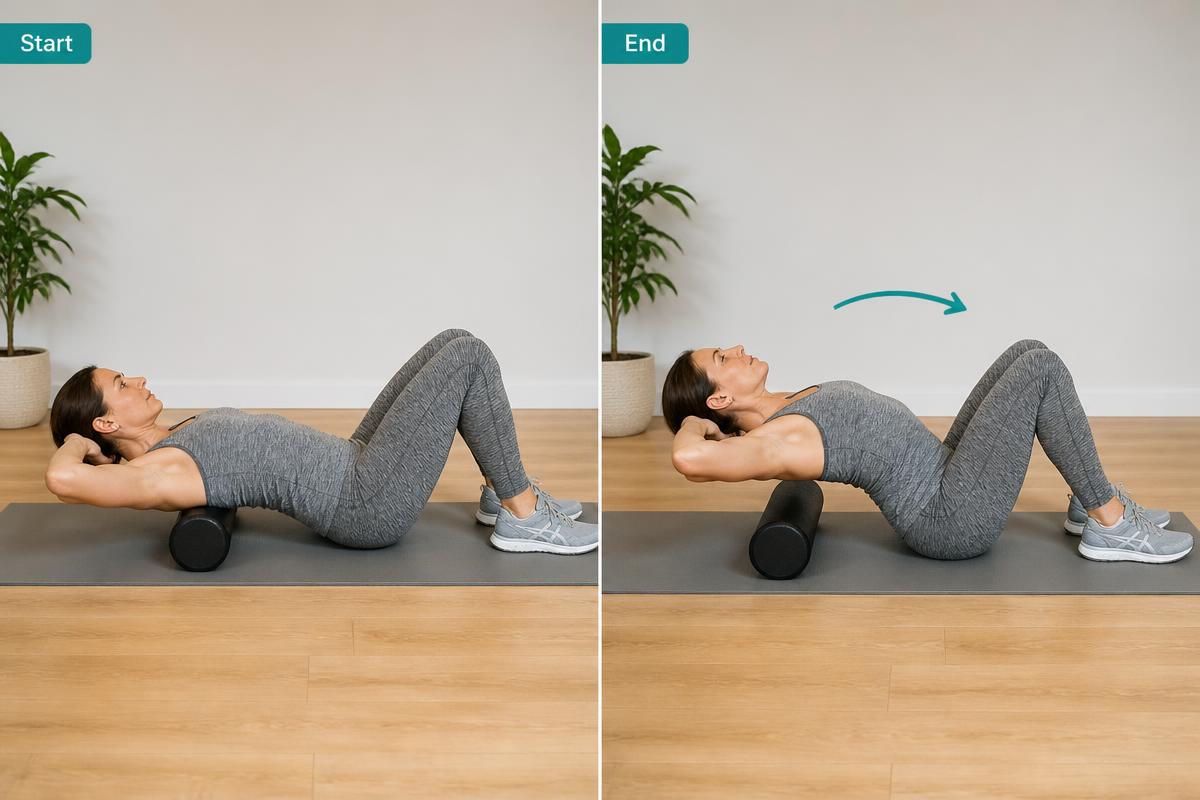
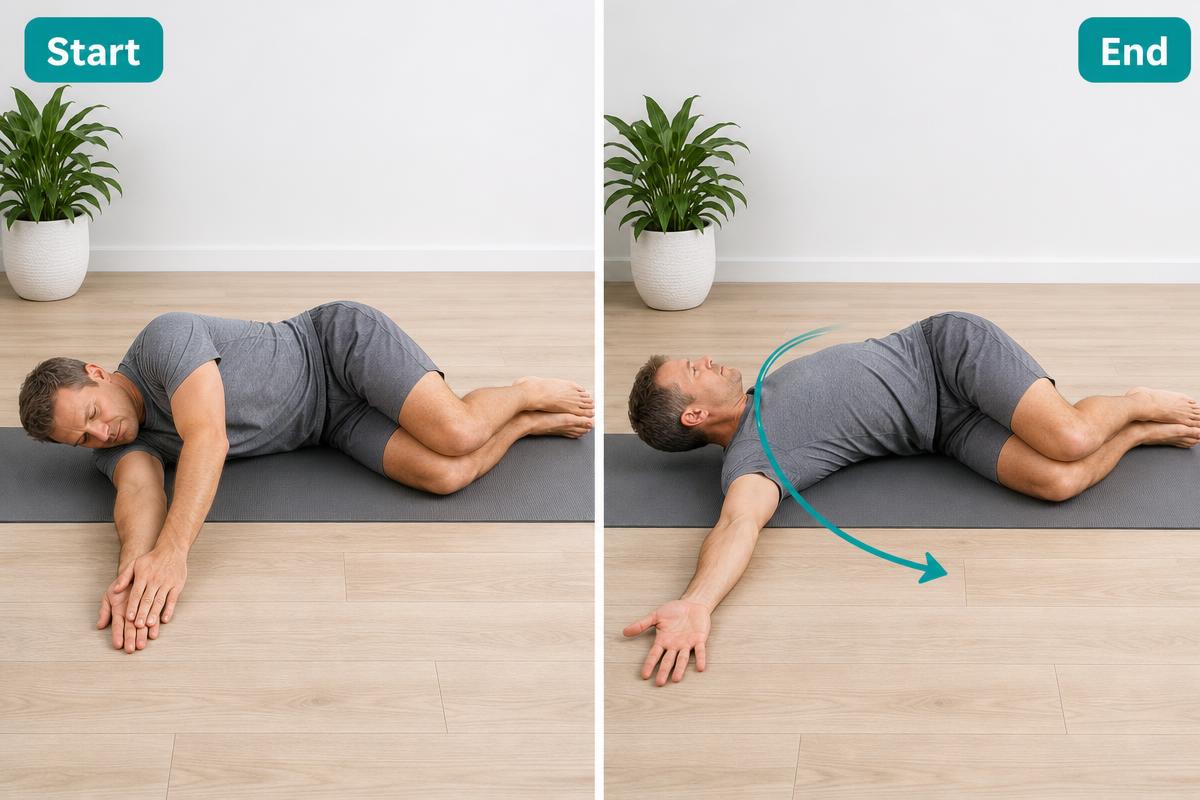
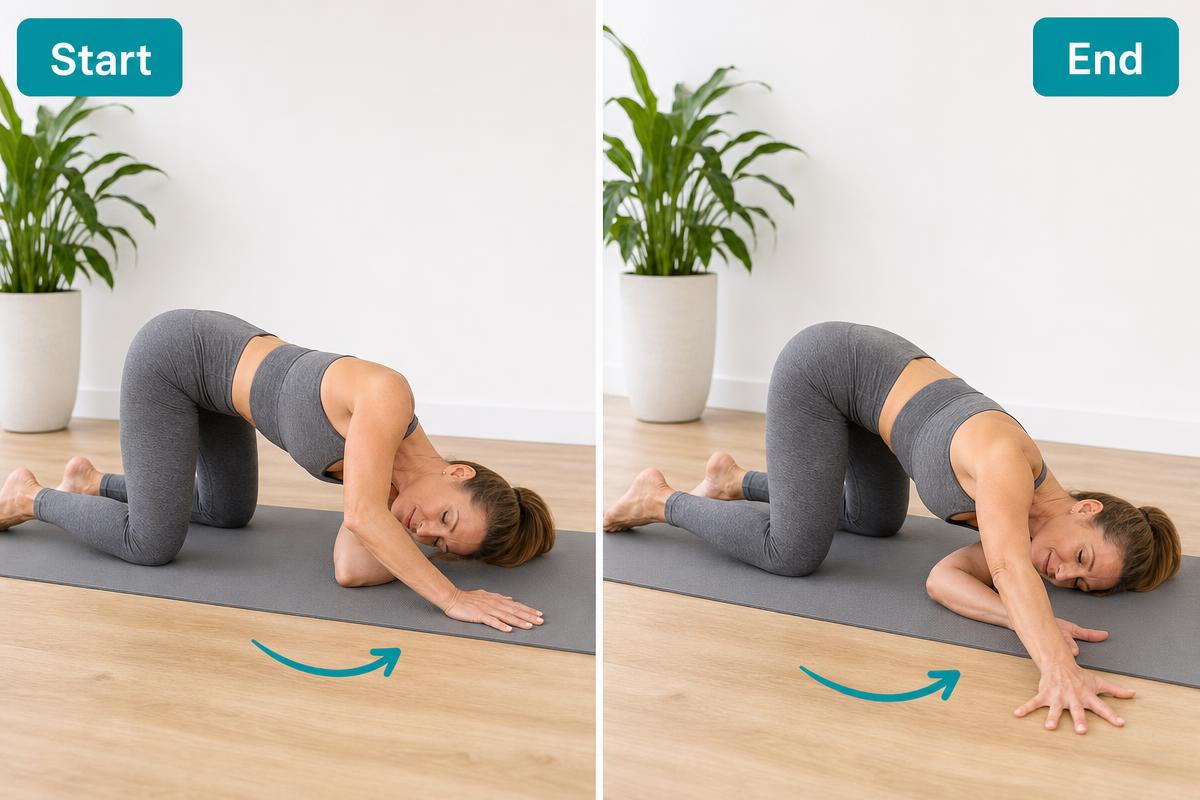
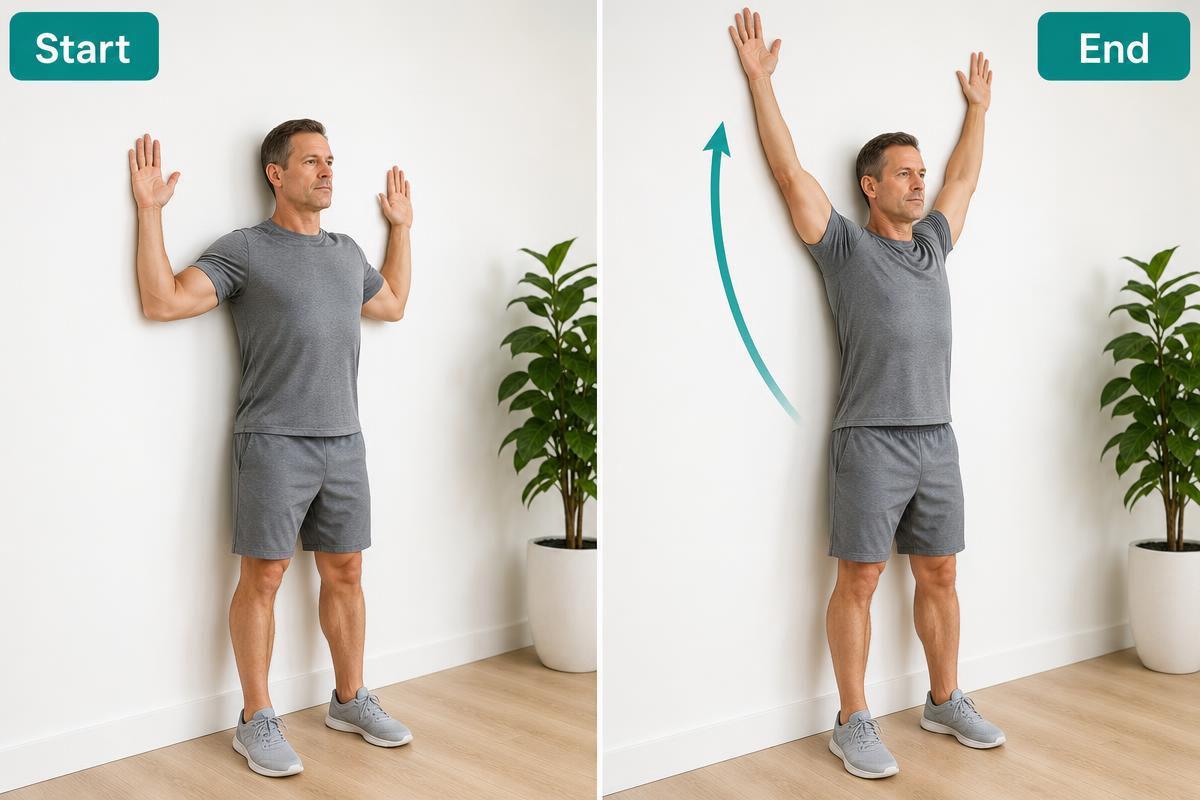
Self-Care
Daily Habits That Help
Set Up Your Desk
Monitor at eye level, chair supportive, feet flat.
Rotate Every 30 Minutes
A few gentle twists keep the mid-back mobile.
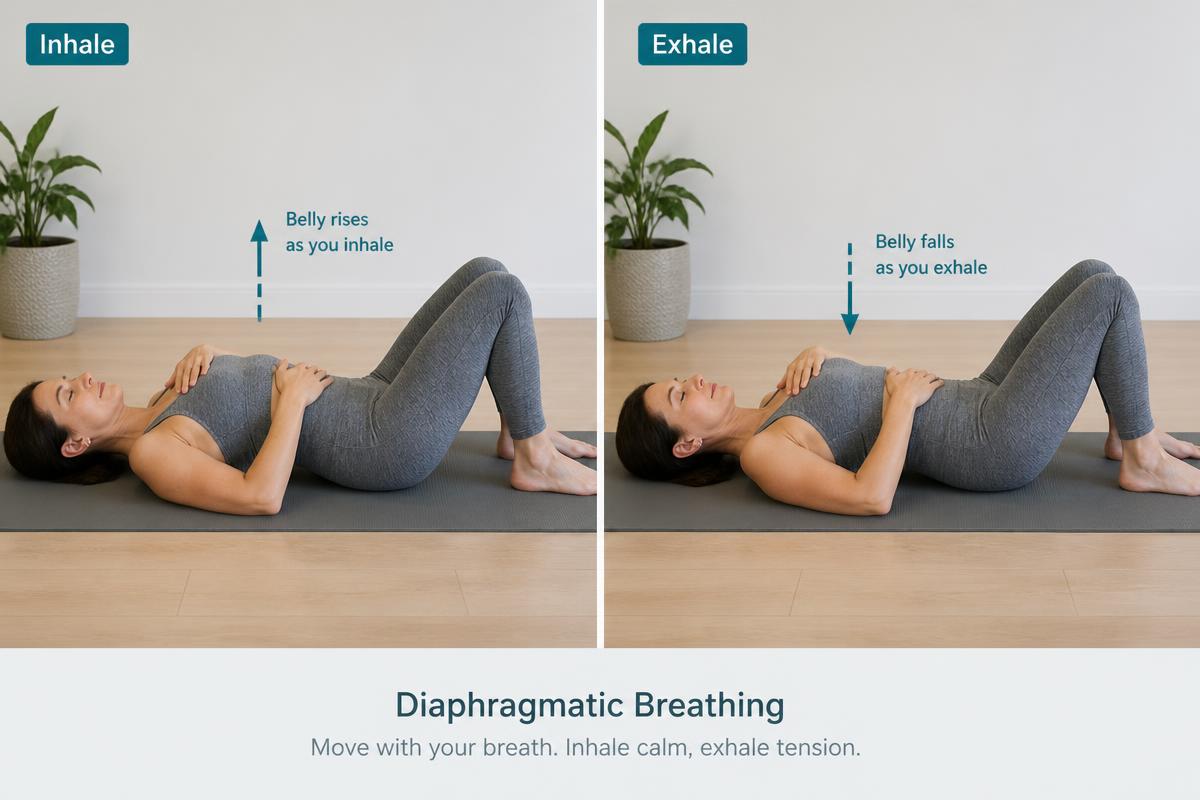
Breathe Deeply
Diaphragmatic breathing improves rib and spine mobility.
Strengthen Rows
Row-style exercises build lasting mid-back support.
Open the Chest
Doorway pec stretches counter the desk posture.
Stay Active
Daily walking supports overall spinal health.
Home Care
Heat vs Ice
When heat may help
- Chronic stiffness or ongoing tightness
- Before stretching or gentle movement
- Muscle spasms and tension
When ice may help
- New injury within the first 24–48 hours
- Swelling or a warm, inflamed area
- After a flare-up from overuse
If pain is severe, worsening, or lasts more than a couple of weeks, check in with a licensed healthcare professional.
When to Seek Immediate Medical Care
The following symptoms need prompt evaluation by a licensed medical professional:
- Severe pain after trauma or a fall
- Chest pain, jaw pain, or shortness of breath
- Fever with mid-back pain
- Numbness, tingling, or weakness in the legs
- Unexplained weight loss with back pain
- History of cancer with new mid-back pain
FAQ
Frequently Asked Questions
Related Conditions
Related Stretches
Disclaimer: The information on this page is for educational purposes only and is not a substitute for professional medical advice, diagnosis, or treatment. Always seek the advice of a qualified healthcare provider with any questions you may have.